

When you fire a trade request from your localized layout, you see a confirmation message print to your ledger within milliseconds. It is incredibly easy to treat your desktop screen like a simple slot machine, entirely disconnected from the heavy institutional clearings running behind the scenes. For growing market participants, understanding how a brokerage firm actively manages the risk generated by your positions is essential for finding a stable, well-capitalized environment that will not choke during intense volatility.
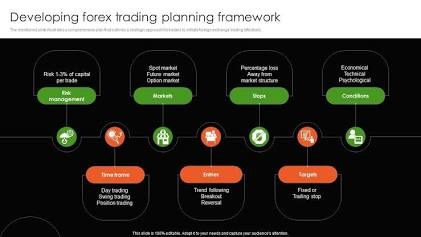
Visualizing structural risk limits and planning frameworks within an institutional network. Source: SlideTeam
Do brokers actually lose their own money when I pull off a massive winning trade?
It depends entirely on how the firm’s technical infrastructure handles your order packet the moment it reaches their data servers. If a brokerage operates as a pure middleman, your winning tickets have zero impact on their corporate balance sheets. They are perfectly content when you win because they make their money through flat volume commissions or small visual markups.
However, if your contract parameters sit inside an internal book where the provider takes the direct opposite side of your risk, your profits are paid straight out of their corporate capital. To balance their books securely, a responsible firm does not simply gamble against its user base; they deploy complex, automated hedging loops to offset their concentrated positions before a massive directional trend can drain their capital reserves.
What exactly is the difference between an A-Book and a B-Book execution path?
These two pathways define the fundamental structural layout of the retail brokerage industry. When you use an A-Book or agency model, the broker acts purely as a technical courier. They pass your buy and sell requests straight through a liquidity bridge to external global banking desks.
Conversely, a B-Book model means the intermediary internalizes your transaction completely. They essentially become the market maker, stepping into the arena as the principal counterparty. While B-booking small, erratic retail tickets is highly profitable for firms due to typical consumer loss statistics, it leaves them fully exposed to market direction. Finding a stable balance requires filtering trades carefully, which is why identifying a platform backed by the best cfd broker framework ensures your orders route through a transparent, institutional-grade agency pipeline when your size outgrows internal books.
Brokeree Solutions+ 1
How does a modern hybrid model automate these routing choices in real-time?
Most premier brokerage platforms no longer operate as a rigid, single-line system. They deploy sophisticated risk management software overlays that scan incoming order flows and segment traders dynamically.
Yourfintech
The system automatically profiles accounts based on deposit history, win rates, and average holding times. Small, fractional retail lots are usually kept inside the internal B-book pool because internalizing them reduces the working capital tied up in external banking margins. The exact second an account demonstrates structured algorithmic precision or trades with massive volume, the software dynamically switches its routing logic. It pushes that toxic flow directly out to institutional clearers via the A-book pipeline to shield the broker from severe, unhedged capital drops.
Yourfintech
What happens inside the system when everyone tries to buy the same asset at once?
This structural bottleneck is known as concentration risk, and it is the ultimate test for an internalized dealing desk. Suppose a major macroeconomic trend triggers a massive wave of retail buying on a single pair. The broker’s internal book accumulates a dangerously lopsided short inventory.
To keep this inventory from blowing past pre-defined safety limits, risk managers rely on position netting. They offset the internal buy orders against internal sell orders first, matching the volume in-house. If the imbalance remains too heavy, automated triggers inside the liquidity bridge instantly fire heavy hedge blocks out to prime global brokers. They buy massive wholesale contracts externally to neutralize their net exposure, ensuring a sudden price spike cannot collapse their corporate capital.
Brokeree Solutions+ 1
How do brokers shield their infrastructure when global prices gap violently?
Extreme volatility can cause asset prices to skip past technical chart boundaries without matching any orders along the way. These sudden gaps introduce a massive risk of negative retail balances. If a trader utilizes extreme purchasing limits and the market gaps completely past their protective stop-loss, the account equity can plunge into a negative state.
Brokeree Solutions
The broker is legally obligated to cover that financial shortfall with their prime clearing houses. To insulate their network from this structural risk, intermediaries deploy dynamic margin systems that automatically scale down your maximum available purchasing parameters ahead of major economic data drops. Gaining a complete mechanical view of what is leverage trading will help you see exactly why platforms enforce these abrupt margin restrictions; it is a vital safeguard that prevents localized consumer liquidations from damaging the firm’s foundational clearing lines.
Stop evaluating trading platforms based on superficial marketing bonuses or loud website layouts. Open your desktop terminal settings this week and carefully audit your broker’s regulatory disclosures, capital adequacy reports, and exact order execution models. By moving your active capital away from small, unregulated market makers that internalize one hundred percent of their volume, and routing your strategy through robust, multi-LP aggregated networks instead, you can ensure your entries execute in an environment built to withstand extreme historical price shocks with absolute structural safety.