

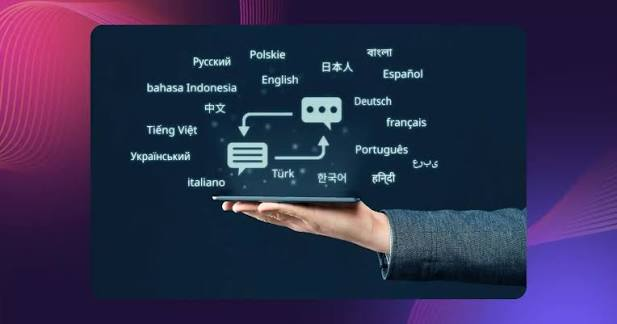
For centuries, communication between people from different countries relied on human translators and the process of learning new languages. Today, artificial intelligence is transforming this landscape by enabling rapid and increasingly accurate translations. AI-powered tools can interpret text, audio, and conversations in real time, bringing cultures closer together and facilitating global connections.
Advances in machine translation systems have been driven by the development of neural networks and models capable of understanding context, idioms, and various forms of language. Unlike older digital translators, which often produced literal conversions, modern solutions analyze the meaning of sentences to deliver more natural-sounding results.
This technology is already being used across various sectors. Companies employ smart translation tools to expand their international business, global teams communicate more easily, and travelers can interact in foreign countries without relying entirely on language proficiency. Thanks to technological evolution, the language barrier is steadily diminishing.
The growth of digital connectivity has also expanded the range of services available to users worldwide. Beyond tools for communication, education, and productivity, there are specialized platforms—such as 20Bet—that form part of the vast online ecosystem created by the advancement of the internet and smart technologies.
In education, AI-driven translation opens up new learning opportunities. Students can access content produced in various languages, participate in international courses, and explore knowledge that was previously restricted by language barriers. This fosters a greater exchange of information among people from different regions.
In the corporate world, this technology is also transforming international meetings and negotiations. Simultaneous translation systems allow professionals to converse in different languages with minimal lag, making global partnerships simpler and more efficient. This evolution benefits companies looking to operate in international markets.
Despite these advances, AI-based translation still faces challenges. Languages possess cultural characteristics, local expressions, and meanings that can vary depending on the context. Therefore, human involvement remains crucial for reviewing sensitive content and ensuring accuracy in specific situations.
The future of machine translation promises even greater innovation through the combination of artificial intelligence, voice recognition, and advanced language processing. Before long, conversations between people from different countries will be able to take place almost naturally, as if everyone spoke the same language. This technology represents one of the digital era’s major achievements, bringing people closer together and making knowledge more accessible on a global scale.
