

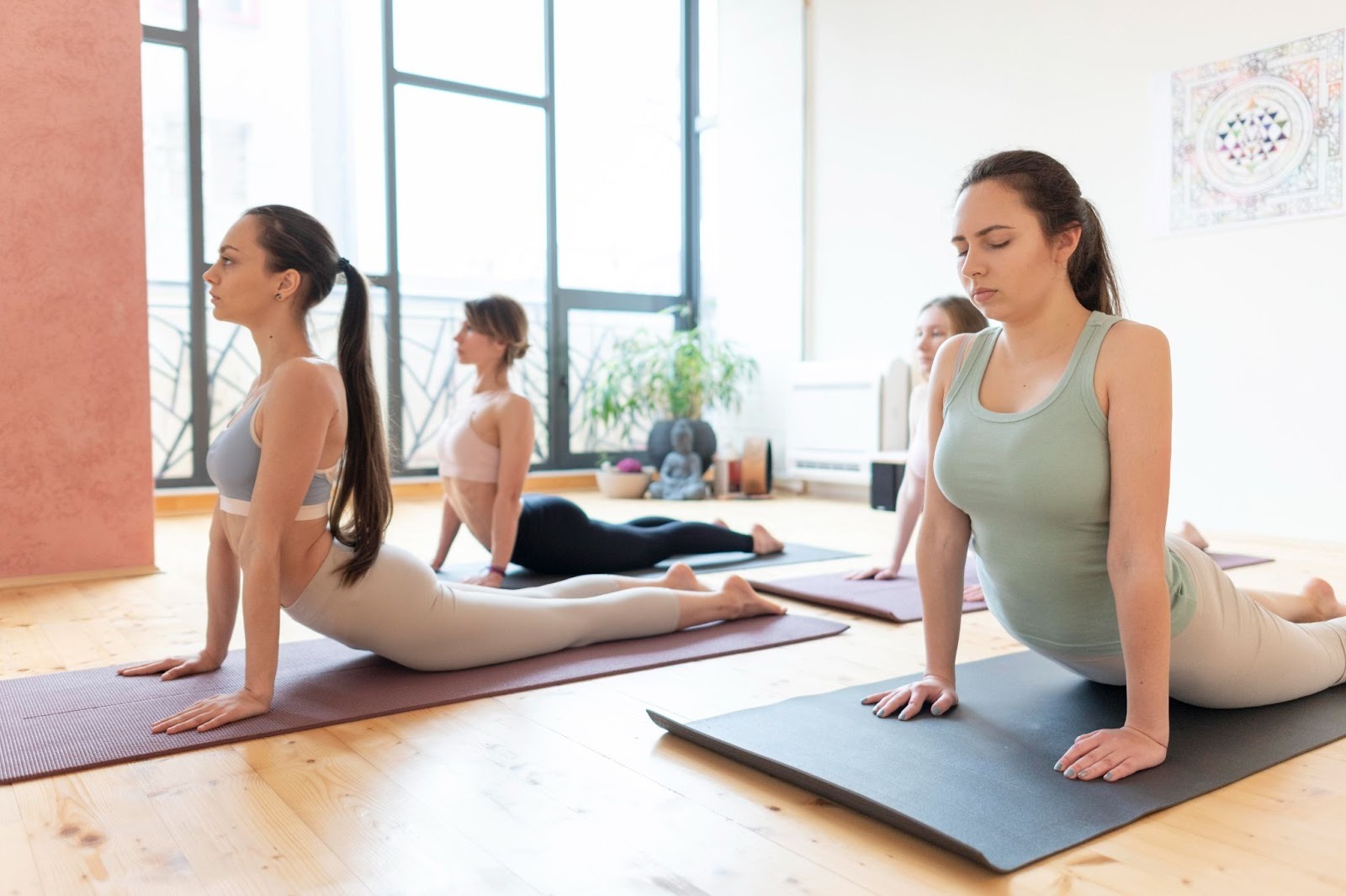
Most people assume balanced poses are hard because of weak legs or poor flexibility. Spend any time in a yoga teacher training in Bali for beginners, and that assumption gets challenged pretty quickly. The legs are rarely the main issue. What makes balance poses genuinely difficult has more to do with what is happening above the neck than below the hips.
The Nervous System Is Running the Show
The muscles are not really what balance runs on. It is more of a communication system between the feet, the inner ear, and the eyes, all feeding information to the brain, which then makes constant tiny corrections. Disrupt any part of that conversation, and the wobble shows up fast.
That also explains why the same pose can feel completely different two days apart. Tuesday it holds, Thursday it falls apart, and nothing obviously changes. Students in a Bali yoga teacher training for beginners tend to take this personally at first, as if they have gone backwards somehow. The variability is not a sign that something is wrong. It is just the nervous system doing its job under different conditions each time.
The Eyes Are Doing More Work Than People Realise
Most people know to find a fixed point to stare at in a balanced pose. Fewer people understand why that actually helps. The eyes are constantly reporting back to the brain about where the body is sitting in space. Pick a spot that moves, and that report becomes messy. The body gets confused signals and has nothing reliable to correct toward.
This is also why closing the eyes in Tree Pose turns a manageable challenge into something much harder. Take away the visual input, and the body has to rely entirely on the feedback coming from the feet and the inner ear. Most students are genuinely surprised by how much harder Tree Pose gets with the eyes closed. They had no idea the eyes were doing that much of the work. In a Bali yoga teacher training course, this tends to be used as a teaching tool rather than a party trick.
Tension Makes It Harder, Not Easier
The wobble starts, and the natural response is to tighten everything up. Foot gripping, leg locking, and jaw clenching sometimes. The body treats instability like a threat and tries to armour up against it. This almost always makes things worse. Gripping increases tension through the whole chain and reduces the body’s ability to make the small, subtle adjustments that balance actually requires.
The better response is to soften slightly without collapsing. Let your foot spread on the ground for better balance, and keep a slight bend in your knee instead of locking it. Keep breathing. Students at an intensive yoga teacher training in Bali spend a lot of time learning to distinguish between useful engagement and the kind of bracing that gets in the way. That distinction is harder to learn than it sounds.
The Mind Wanders and the Body Follows
There is a direct relationship between where the attention goes and what the body does in a balanced pose. Think about falling, and the body starts preparing to fall. Start replanning the afternoon in the middle of Warrior III, and the hips quietly begin to drift. The pose requires presence in a way that most other poses do not demand quite so insistently.
This is one of the reasons balance poses appear so consistently in the curriculum of advanced yoga teacher training in Bali. They are not just physical challenges. They are attention training. The student who can stay focused through thirty seconds of genuine instability is developing something that goes well beyond what any strength exercise can build.
The Floor Matters More Than the Pose
The standing foot is where most balance problems actually start, even when they seem to be occurring higher up. A passive foot, rolling in, or scrunched up is sending poor quality signals through the ankle, knee and hip. Everything above it is then quietly working around a foundation that was never stable to begin with. Toes spread, weight shared evenly front to back, arch lifted rather than sinking into the floor. That is where the work begins, not at the hips or the arms.
In an intensive yoga teacher training, the foot gets treated as the starting point for almost every standing pose because fixing what is happening down there often resolves problems that seem to be coming from somewhere else entirely.
Why Some Days Are Just Harder
Sleep, stress, hydration, and how long you have been sitting before class. All of these affect the nervous system and, by extension, affect balance. A student who slept poorly and came straight from a desk to a yoga mat is working with a system that is already running on less-than-ideal input.
Understanding this changes how students relate to difficult days in practice. The wobble is not failure, and it is not regression. In a Bali yoga teacher training for beginners, this reframe tends to land as a genuine relief for a lot of people. The body is not broken on those days. It is just telling you something about the day it has had.
