

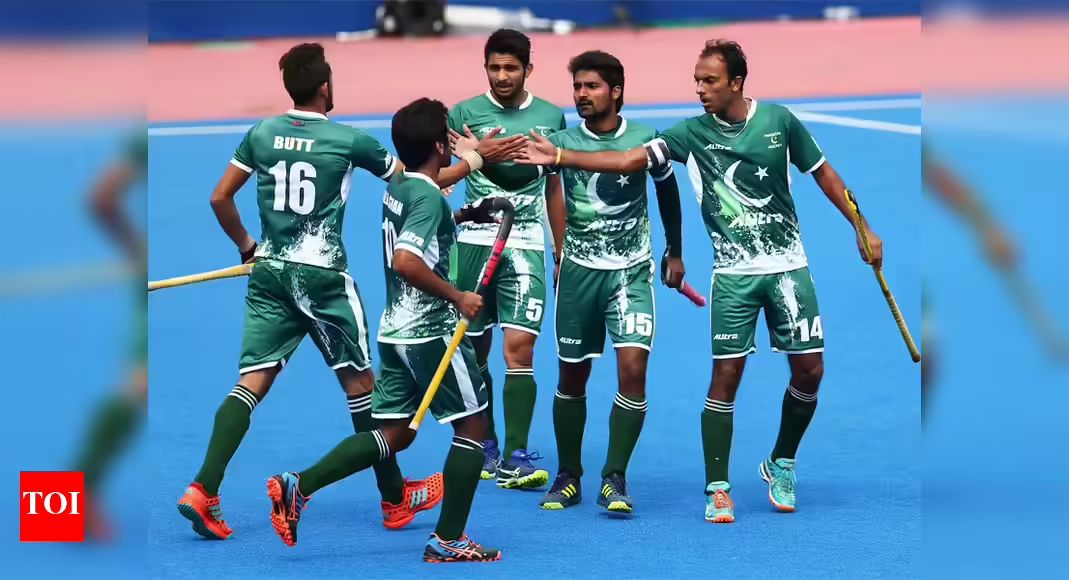
Description: A beginner-friendly look at India’s hockey comeback, from Olympic bronzes to Asian success, and whether true dominance can return.
Indian hockey has moved from memory to momentum. For decades, the sport lived on stories of Dhyan Chand, Olympic golds, and a style that once made India untouchable. Now the conversation feels different. With back-to-back Olympic bronze medals for the men at Tokyo 2020 and Paris 2024, and the women becoming a serious force in Asia, Hockey Revival: Can India Reclaim Its Historic Dominance? is no longer a nostalgic question. It is a live sporting debate with real evidence behind it.
Hockey Revival: Can India Reclaim Its Historic Dominance? Quick Answer
Yes, India can reclaim a major place in world hockey, though repeating the total dominance of the 1928 to 1980 era will be much harder today. The recent Olympic medals, Asian titles, stronger infrastructure, and steady progress in both men’s and women’s hockey show that India is building a modern version of success, not just chasing old glory.
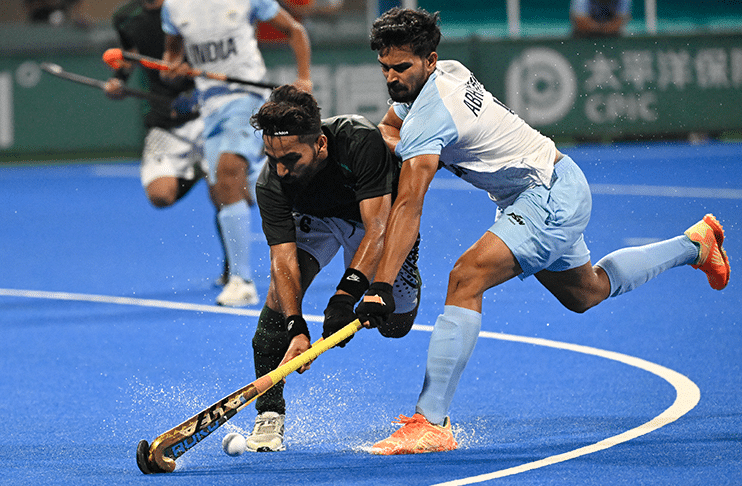
Why this question feels important again
For many Indians, hockey is more than a sport. It is part of the country’s sporting identity.
From the 1928 Amsterdam Olympics to the 1980 Moscow Games, India built one of the greatest legacies in team sport. The men’s team won eight Olympic gold medals, plus one silver and two bronze medals. Between 1928 and 1956, India claimed six straight Olympic golds, a run that still sounds unbelievable to new fans. That is why every modern result carries extra emotional weight. Even a bronze medal is judged against a past filled with gold. For fans who enjoy learning more about individual players, official NHL profiles offer reliable information on career milestones, statistics, and achievements. Exploring his hockey career through these profiles provides valuable context about a player’s journey and the dedication required to compete at the highest level.
How a giant lost its grip
The decline was not sudden, but it was painful. By the 1980s, world hockey had changed, and India struggled to keep up.
The biggest shift came with synthetic turf. The game became faster, more physical, and more dependent on structure, stamina, and speed. India’s traditional strengths, especially close control and artistic stick work, were no longer enough on their own. While European teams, Australia, and other Asian rivals adapted quickly through better coaching, fitness, and facilities, India fell behind. Administrative issues and cricket’s growing dominance made the slide even harder to stop.
The lowest point came in 2008. India failed to qualify for the Beijing Olympics for the first time in 80 years.
For a country that once treated Olympic hockey as familiar territory, that miss felt like a national shock. It showed that history alone could not protect the team anymore.
Why the revival started to look real
The comeback did not begin with one medal. It began with stronger systems.
Hockey never disappeared from states like Punjab, Haryana, Odisha, and Jharkhand. Grassroots tournaments kept the sport alive, and young players kept coming through. Once governance was restructured, foreign coaches helped modernise tactics, and fitness became non-negotiable, India started looking more competitive. In the same sports culture where fans may switch from a hockey match to cricket updates or search 1xbet download apk on their phones, hockey has managed to pull attention back by winning important matches.
Infrastructure also changed the picture. Odisha played a major role by sponsoring the national teams and backing world-class venues such as Kalinga Stadium in Bhubaneswar and the Birsa Munda Hockey Stadium in Rourkela. For beginners, this part matters a lot: elite sport is not built on talent alone. It also needs proper training conditions, recovery support, match exposure, and professional management. India’s rise looks more believable now because these pieces are finally working together.
Tokyo 2020 changed the mood
The Tokyo Olympics, held in 2021 because of the pandemic, felt like an emotional reset for Indian hockey. After more than four decades, the men’s team won an Olympic bronze medal by defeating Germany in a thrilling match. That result did more than add another line to the record books. It broke a mental barrier that had hung over the sport for years.
The women’s team made the moment even bigger. They reached the Olympic semi-finals for the first time and finished fourth after beating strong teams such as Australia along the way. Even without a medal, that campaign changed how many Indian fans viewed women’s hockey. It showed that the revival was not limited to one squad or one lucky run. Both teams were beginning to look like genuine international contenders.
Paris 2024 proved it was not a one-off
This was the real test. One medal can be a breakthrough, but two in a row usually means something deeper is happening.
At the Paris 2024 Olympics, India’s men won bronze again by beating Spain 2 to 1. Captain Harmanpreet Singh scored both goals, while PR Sreejesh made crucial saves. For the first time since the 1970s, India had back-to-back Olympic medals in hockey. That matters because it changes the story from emotional comeback to sustained resurgence. Teams that rely only on momentum often fade after one big tournament. India did not.
Asia has become the proof of consistency
Olympic medals grab the biggest headlines, but regional tournaments often show whether a team is truly solid. On that front, India has looked increasingly convincing.
- Asian Champions Trophy 2023: India beat Malaysia in the final in Chennai.
- Asian Games 2023: India defeated Japan 5 to 1 in Hangzhou to win gold and secure Olympic qualification.
- Men’s Asia Cup 2025: India beat South Korea 4 to 1 in Rajgir, Bihar.
These results are important because they show consistency across different tournaments and pressure situations. A team that once struggled even within Asia is now setting the standard there again. For new fans, this is a useful clue: before a side becomes the best in the world, it usually becomes very hard to beat in its own region.
The women’s rise has changed the whole story
Any serious answer to Hockey Revival: Can India Reclaim Its Historic Dominance? has to include the women’s team. Their progress has added depth and credibility to the revival.
After finishing fourth at Tokyo 2020, the women won bronze at the 2023 Asian Games. They also took back-to-back Asian Champions Trophy titles in 2023 and 2024, then finished runners-up at the Women’s Asia Cup 2025 after losing to China in the final. That is not a random spike. It is a pattern of steady growth.
It also matters beyond medals. More visibility means more girls in places like Jharkhand and other hockey-loving regions can see a real pathway into elite sport. Players such as Savita Punia have become reference points for a new generation, and that is how a sporting culture grows.
Can India dominate like the old days
Here the answer needs some balance. India can absolutely become one of the world’s leading hockey nations again, and in many ways it already has. But repeating the old model of near-total Olympic control is much harder in the modern game.
Global hockey is deeper now. More countries are professionally organised, tactically sharp, and physically prepared. The gap between top teams is smaller, and major tournaments are less forgiving. So if historic dominance means repeating six straight Olympic golds like 1928 to 1956, that is an almost impossible benchmark for any nation today. If it means being a regular Olympic medallist, a top Asian power, and a team that every major rival respects, then India is clearly moving in that direction.
What will decide the next phase
The next step is not romantic. It is practical.
- Keep investing in fitness and modern tactics so India stays aligned with the speed of international hockey.
- Protect grassroots pipelines in Punjab, Haryana, Odisha, and Jharkhand, where much of the talent base remains strong.
- Maintain professional administration so progress does not depend on one generation of players.
- Support both men’s and women’s programmes consistently, because combined success strengthens the sport nationally.
- Turn packed stadiums and school tournaments into long-term participation, not just short bursts of excitement.
The cultural signs are encouraging. Packed stands in Odisha, school competitions in Punjab, and growing conversation on social media all suggest hockey is returning to mainstream sporting life in India. Corporate support and government backing have followed success on the field, which is usually how sustainable revival works.
A comeback with real substance
Indian hockey is no longer living only on old photographs and legendary names. It has recent proof: Olympic bronze in Tokyo 2020, Olympic bronze in Paris 2024, Asian Champions Trophy success, Asian Games gold in 2023, and the Men’s Asia Cup title in 2025. The women have matched that rise with a semi-final run at Tokyo, Asian Games bronze, two Asian Champions Trophy titles, and a Women’s Asia Cup runner-up finish in 2025.
That does not guarantee a return to the absolute supremacy of the past. But it does confirm something important. India has rebuilt enough to compete for major honours regularly again.
So, can India reclaim its historic dominance? Not in the exact old form, because world hockey has changed too much. But India can build a new version of dominance: modern, consistent, respected, and strong enough to make every major tournament feel like a genuine medal opportunity.
FAQ
Q: Why does hockey still matter so much in India?
A: Hockey gave India some of its earliest and biggest global sporting success. That Olympic legacy still makes the sport emotionally important for many fans.
Q: Why was the 2008 failure to qualify such a big moment?
A: It was the first time in 80 years that India missed the Olympics in hockey. For a country with such a rich history in the sport, it felt like a major national setback.
Q: What made Tokyo 2020 such a turning point?
A: The men ended a wait of more than 40 years for an Olympic medal, while the women reached the semi-finals for the first time. Together, those results restored belief in Indian hockey.
Q: Is the women’s team now a serious force in Asia?
A: Yes. They won bronze at the 2023 Asian Games, took Asian Champions Trophy titles in 2023 and 2024, and finished runners-up at the Women’s Asia Cup 2025.
Q: What would modern dominance look like for India?
A: It would mean regular Olympic podium finishes, strong results in Asia, and consistent status as one of the world’s top teams. That is a more realistic target than repeating the old era of near-total control.
