

Blackjack, a seemingly simple game of chance, transforms into a battle of wits and strategy when approached with a serious mindset. Beyond the rudimentary understanding of hitting and standing lies a complex world of card counting, advanced betting techniques, and psychological warfare. For players seeking to elevate their game and consistently outperform the house, mastering these advanced strategies is paramount. This guide delves into the multifaceted aspects of advanced blackjack play, equipping you with the knowledge and tools necessary to become a formidable opponent.
Understanding Basic Strategy Deviations
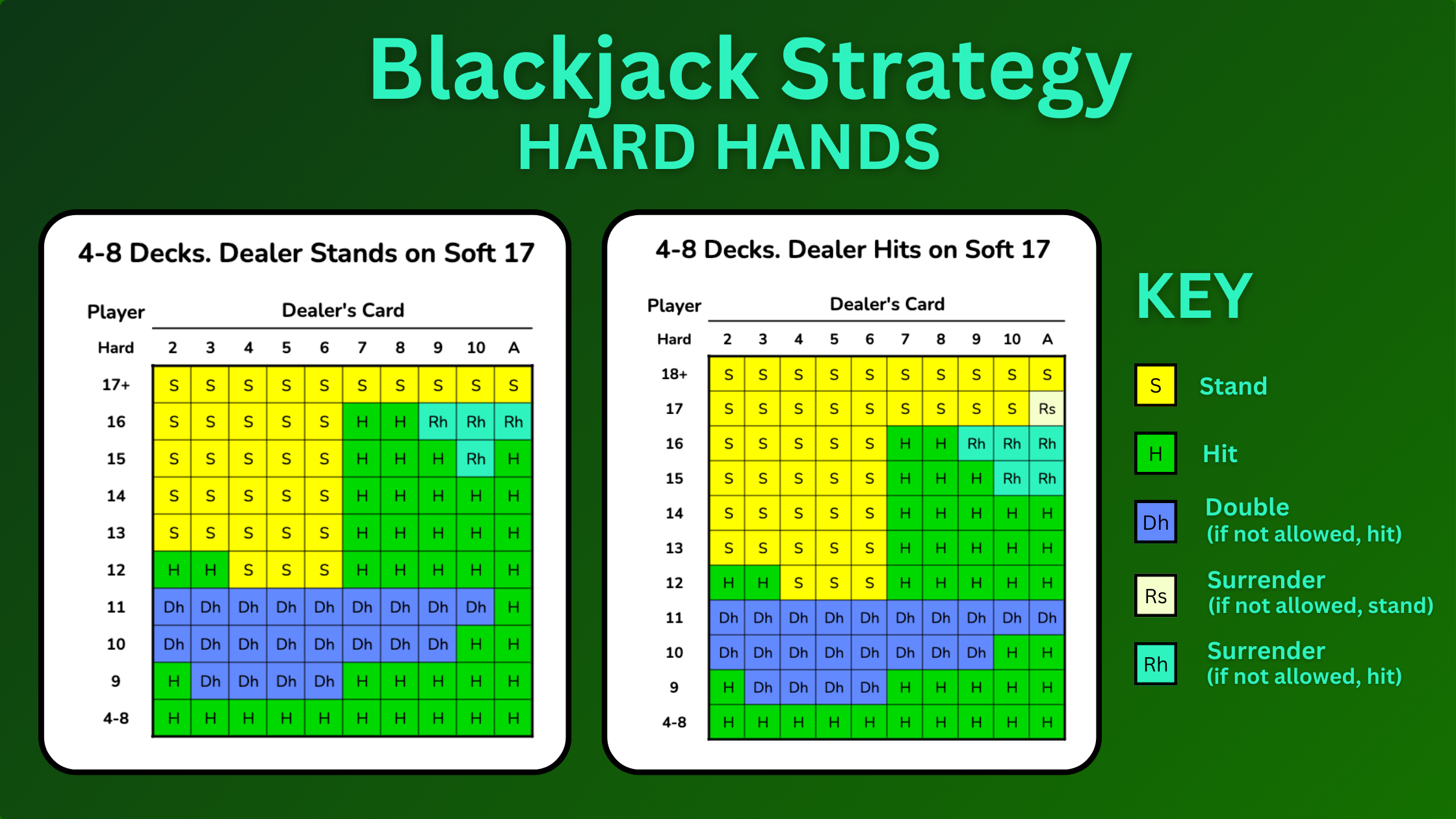
Basic strategy forms the bedrock of any successful blackjack player’s approach. It’s a mathematically derived set of decisions dictating the optimal action for every possible hand combination against each dealer upcard. However, adhering strictly to basic strategy alone isn’t enough to gain a significant edge. Advanced players recognize that deviations from basic strategy are crucial, especially when card counting.
Card counting, at its core, involves tracking the ratio of high cards (10s, face cards, Aces) to low cards (2-6) remaining in the deck. When the count is high, indicating a surplus of high cards, the odds shift in the player’s favor. This is because high cards increase the likelihood of blackjacks for the player and dealer busts when they hit. In these situations, deviating from basic strategy becomes advantageous.
Common deviations include:
* Hitting a stiff hand: A stiff hand is one that can bust with a single hit (e.g., 12-16). Basic strategy often dictates standing on these hands against certain dealer upcards. However, with a high count, hitting a stiff hand becomes more profitable, as the chances of the dealer busting increase.
* Standing on a soft 17: Basic strategy typically advises hitting a soft 17 (A-6) when the dealer shows a 7 or higher. However, in high count situations, standing on a soft 17 can be the more advantageous play, especially if the dealer is likely to bust.
* Doubling down more aggressively: Doubling down allows you to double your bet in exchange for receiving only one more card. Basic strategy outlines specific scenarios for doubling down. However, with a favorable count, expanding the range of hands you double down on can significantly increase your expected value.
Mastering these deviations requires diligent study and practice. Many resources, including strategy charts tailored to different card counting systems, are available to help players learn and memorize these critical adjustments.
Card Counting Techniques: Beyond the Basics
While numerous card counting systems exist, ranging in complexity from simple to highly intricate, the most commonly used and effective systems share common principles. The Hi-Lo system, a level-one counting system, is a popular starting point. It assigns a value of +1 to low cards (2-6), -1 to high cards (10, J, Q, K, A), and 0 to cards 7-9. As cards are dealt, the player keeps a running count, adding or subtracting values based on the cards seen.
However, advanced card counters go beyond simply tracking the running count. They convert the running count into a “true count” by dividing the running count by the estimated number of decks remaining in the shoe. The true count provides a more accurate representation of the card composition and allows for more precise betting and playing decisions.
Furthermore, advanced players understand the importance of “wonging” or “back-counting.” Wonging involves observing a game without playing, tracking the count, and only entering the game when the count becomes favorable. This allows players to maximize their edge and minimize their exposure during unfavorable counts.
Beyond the Hi-Lo system, more complex systems like the Zen Count or the Halves system offer increased accuracy but require significantly more mental effort. These systems assign fractional values to certain cards, making them more difficult to master but potentially more rewarding.
Bankroll Management and Betting Strategies
Effective bankroll management is crucial for any serious blackjack player, regardless of their skill level. A well-defined bankroll management strategy protects against variance and ensures long-term profitability.
A common guideline is to allocate a bankroll that is at least 50 to 100 times the minimum bet you plan to make. This provides a sufficient cushion to withstand inevitable losing streaks.
Betting strategies are closely tied to card counting. The general principle is to increase your bet size when the count is favorable and decrease it when the count is unfavorable. The Kelly Criterion, a mathematical formula for determining optimal bet size, is often used by advanced players. However, the Kelly Criterion can be aggressive and may not be suitable for all players.
A more conservative approach is to use a betting spread, which involves varying your bet size based on the true count. For example, a player might bet one unit when the true count is negative or zero, and then increase their bet by one unit for each positive increment in the true count.
Regardless of the specific betting strategy employed, it’s crucial to stick to it consistently and avoid emotional betting decisions. Discipline is paramount in maintaining a stable bankroll and maximizing long-term profits.
Psychological Warfare and Deception
Blackjack is not just a game of math and statistics; it’s also a game of psychology. Experienced players understand the importance of reading their opponents and using deception to their advantage.
One common tactic is to vary your betting patterns to avoid detection. This can involve occasionally making small bets when the count is favorable or making large bets when the count is unfavorable. The goal is to create the illusion of randomness and make it more difficult for casino staff to identify you as a card counter.
Another tactic is to use body language and verbal cues to mislead your opponents. This could involve pretending to be unsure of your decisions or feigning frustration when you make a bad play. The goal is to create confusion and uncertainty, which can lead your opponents to make mistakes.
However, it’s important to be mindful of ethical considerations. While deception is part of the game, it’s important to avoid cheating or engaging in any illegal activities.
Online Blackjack Strategies
While the fundamental principles of blackjack remain the same whether played online or in a brick-and-mortar casino, there are some unique considerations for online play.
One key difference is the use of random number generators (RNGs) to shuffle the cards. While RNGs are designed to be fair, some players are skeptical of their randomness. It’s important to choose reputable online casinos that are licensed and regulated by trusted authorities.
Another difference is the absence of physical tells. In online blackjack, you cannot read your opponents’ body language or verbal cues. This makes it more difficult to assess their skill level and betting patterns.
However, online blackjack also offers some advantages. You can play at your own pace, without the pressure of other players or casino staff. You can also use online tools and resources to help you make better decisions.
Furthermore, online casinos often offer bonuses and promotions that can increase your bankroll. It’s important to read the terms and conditions carefully before accepting any bonus, as they may come with wagering requirements or other restrictions.
For instance, if you’re interested in exploring other gaming options, you might want to check out tài xỉu sunwin for a different type of experience. Or, if you’re a fan of sports betting, you can explore thể thao Sunwin for various sports-related opportunities.
The Importance of Practice and Discipline
Mastering advanced blackjack strategies requires significant dedication and practice. It’s not enough to simply read about card counting and betting techniques; you must put them into practice in a real-world setting.
Start by practicing at home with a deck of cards. Practice counting cards, making betting decisions, and deviating from basic strategy. Once you feel comfortable, move on to playing online blackjack for real money.
Start with small stakes and gradually increase your bet size as you become more confident. Keep track of your results and analyze your performance. Identify areas where you can improve and focus on honing your skills.
Discipline is also crucial. It’s important to stick to your bankroll management strategy and avoid emotional betting decisions. Don’t chase losses or get overconfident after a winning streak.
Blackjack is a game of skill and strategy, but it also involves luck. There will be times when you lose, even when you’re playing perfectly. The key is to stay disciplined, manage your bankroll effectively, and continue to improve your skills.
Staying Ahead of the Curve: Adapting to Changing Conditions
The world of blackjack is constantly evolving. Casinos are always developing new techniques to detect and deter card counters. It’s important to stay ahead of the curve by adapting to changing conditions and learning new strategies.
One way to do this is to stay informed about the latest developments in blackjack. Read books, articles, and online forums to learn about new card counting systems, betting techniques, and casino countermeasures.
Another way to stay ahead of the curve is to network with other blackjack players. Share your experiences, exchange ideas, and learn from each other’s successes and failures.
Finally, it’s important to be willing to experiment and adapt your strategies as needed. The most successful blackjack players are those who are constantly learning and evolving.
Becoming a successful blackjack player requires a combination of skill, knowledge, discipline, and adaptability. By mastering the advanced strategies outlined in this guide and dedicating yourself to continuous improvement, you can significantly increase your chances of winning and become
