

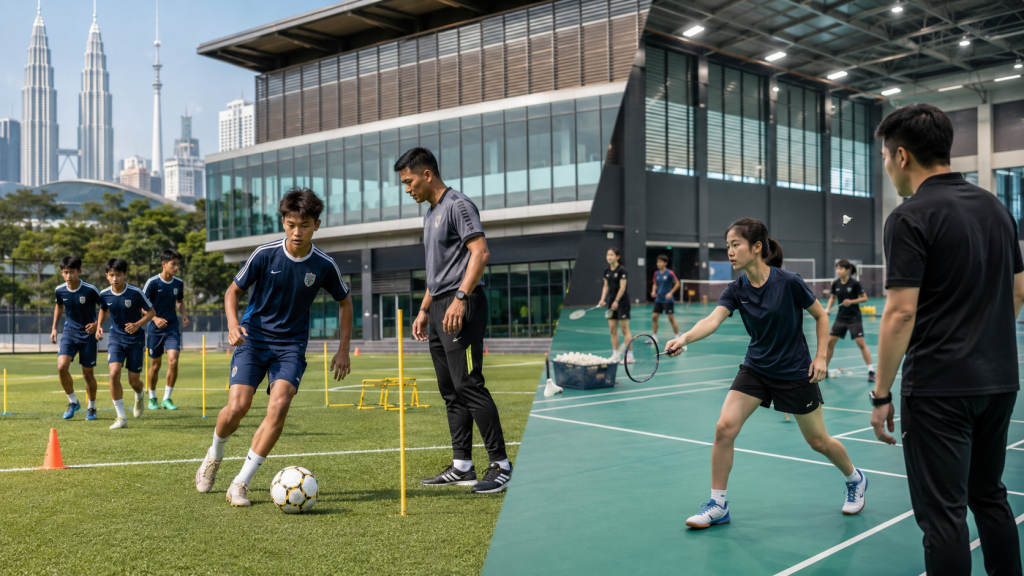
Sports academies in Malaysia play a bigger role than many people realise. They are not just places where children train after school. Good academies create structure, discipline and early exposure to coaching standards that young athletes may not get elsewhere.
The strongest academies usually combine training with education, recovery habits and competition experience. This matters because talent alone rarely carries a player far. The environment around that talent often decides what happens next.
Among local sports followers, https://dk-88-official.com/ reflects the wider interest in competition. It connects with the way Malaysian audiences follow matches, results and athlete performance, especially in a digital environment where updates are instant and engagement is constant. This growing connection between sports and online platforms shows how deeply competition is embedded in everyday routines.
Why Academies Matter
A good academy helps young athletes learn more than technique. It teaches timing, teamwork, nutrition, focus and respect for routine. These habits are useful even for students who do not become professionals.
Sports academies often support development through:
- regular coaching sessions;
- age-based training groups;
- fitness and conditioning work;
- match exposure;
- basic injury prevention;
- discipline around school and sport;
- contact with scouts or clubs;
This structure gives young athletes a clearer path. It also helps parents understand what serious training actually requires. Over time, these systems also build confidence and resilience, which are valuable beyond sports.
Football, Badminton and Beyond
Football and badminton remain major areas of interest in Malaysia, but academies also support swimming, athletics, tennis, martial arts and basketball. Each sport has different needs, yet the core idea is similar: start with fundamentals, then build consistency.
Badminton academies often focus on footwork, reaction and endurance. Football programmes need technical drills, tactical understanding and match intelligence. The best setups avoid rushing children into pressure too early. Instead, they focus on gradual improvement and long-term development.
The Long-Term Effect
Not every academy will produce a national star. That should not be the only measure of success. A strong academy can still improve local sport by creating healthier habits, better coaching culture and more confident young players.
Malaysia’s sporting future depends on these smaller systems. Big tournament results start much earlier, often on local courts and fields where children first learn how to train properly. Over time, these early experiences shape not only athletes but also a stronger sporting culture across the country.
