

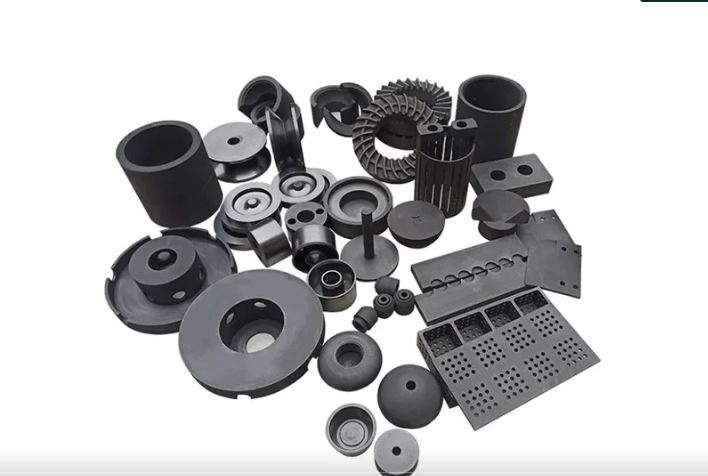
Choosing a mold for a specialized manufacturing process requires more than selecting a material and providing dimensions. The mold must work reliably under the actual temperature, pressure, atmosphere, and production conditions involved.
Graphite is often selected for demanding applications because it combines high-temperature capability with good machinability and thermal properties. However, the right graphite mold depends on the specific process.
When selecting custom graphite molds, manufacturers should evaluate several factors before production begins.
Start With the Manufacturing Process
The first step is to understand exactly how the mold will be used.
Will it be exposed to molten metal? Will it operate inside a furnace? Will the process involve vacuum conditions or a controlled atmosphere?
Different applications place different demands on graphite. Defining the process first makes it easier to identify the appropriate material characteristics.
1. Consider Operating Temperature
Temperature is one of the most important factors.
Graphite is capable of performing in high-temperature environments, but the actual service conditions must be considered. The temperature, heating rate, exposure time, and surrounding atmosphere can all influence performance.
A supplier should know the maximum operating temperature and whether the mold will experience rapid heating and cooling.
2. Select the Appropriate Graphite Grade
Graphite is available in different grades with different physical properties.
Important characteristics may include:
- Density
- Purity
- Grain size
- Mechanical strength
- Thermal conductivity
- Electrical conductivity
- Thermal expansion
- Oxidation resistance
For example, an application requiring very clean processing conditions may place greater emphasis on graphite purity, while a mechanically demanding process may prioritize strength.
3. Define Dimensions and Tolerances
Custom molds should be manufactured according to clear dimensional requirements.
Provide accurate technical drawings whenever possible. Include cavity dimensions, wall thickness, openings, grooves, tolerances, and any other important features.
The tighter the tolerance, the more important machining capability and quality control become.
4. Think About Mold Geometry
Simple shapes are generally easier to machine than highly complex cavities.
If the mold includes narrow channels, deep cavities, thin walls, or intricate features, discuss the design with the graphite manufacturer before production.
A manufacturer may be able to recommend modifications that make the mold easier to machine while maintaining the required function.
5. Evaluate Thermal Shock
Manufacturing processes can expose molds to rapid temperature changes. Repeated heating and cooling can create thermal stress.
Graphite is known for useful thermal shock resistance, but the performance still depends on the graphite grade and specific process conditions.
If the mold will undergo frequent thermal cycling, this should be clearly communicated during material selection.
6. Consider Surface Finish
Surface finish can affect how easily a finished component separates from the mold and how accurately the mold reproduces the intended geometry.
Machining quality should therefore be considered alongside dimensional accuracy.
For applications involving very detailed components, discuss the required surface finish before manufacturing begins.
7. Production Volume Matters
A mold used to produce a handful of prototypes may not need exactly the same design considerations as a mold used for thousands of production cycles.
For high-volume applications, durability and consistent performance become increasingly important.
Understanding the expected production volume helps manufacturers select suitable graphite grades and design features.
8. Ask About Quality Control
Quality control is particularly important for custom components because every mold is manufactured according to specific requirements.
Before placing an order, ask how dimensions, material properties, surface finish, and other specifications will be verified.
A reliable supplier should be able to communicate its manufacturing and inspection process clearly.
Graphite Plates and Other Components
Molds are only one type of graphite component used in industrial applications. Depending on the process, manufacturers may also require graphite plates, crucibles, rods, or other machined parts.
If your project involves several graphite components, it can be useful to work with a manufacturer capable of producing different products from suitable graphite grades.
You can also explore custom graphite molds and related graphite products when evaluating options for a specialized application.
Questions to Ask Before Ordering
Before approving a custom mold, confirm:
- What graphite grade will be used?
- What is the maximum operating temperature?
- What tolerances can be achieved?
- What surface finish is possible?
- How will the mold be inspected?
- What is the expected service life?
- What is the minimum order quantity?
- What is the production lead time?
Having these details clarified early can reduce misunderstandings and help prevent costly redesigns.
Conclusion
Selecting the right custom graphite mold requires careful consideration of the manufacturing process, material grade, dimensions, temperature, geometry, thermal cycling, and production volume.
The cheapest mold is not necessarily the most economical choice if it cannot maintain performance throughout the required production cycle. By matching graphite properties to actual operating conditions and working with an experienced manufacturer, businesses can obtain molds designed for reliable and repeatable performance.
