

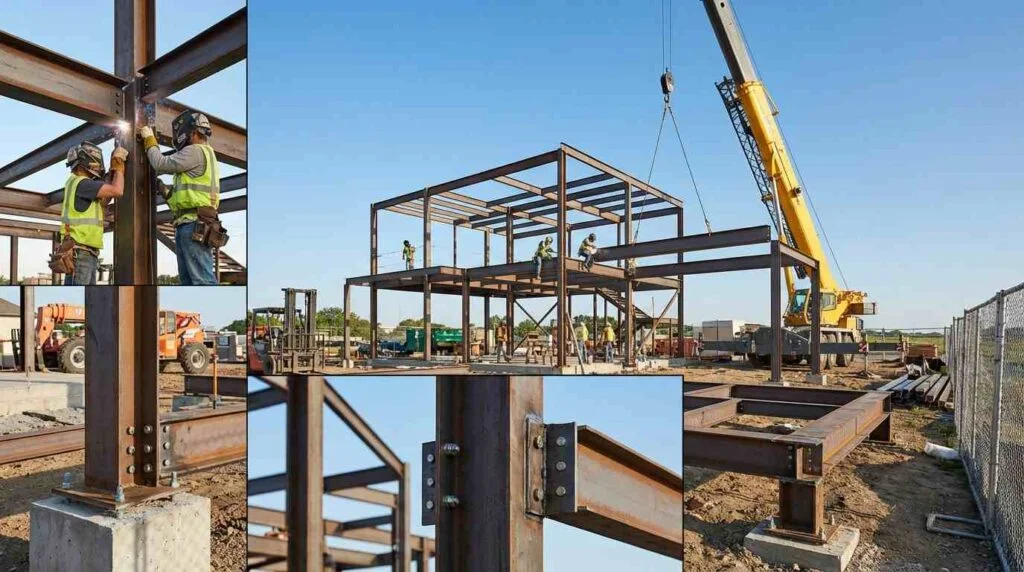
Beam construction is a core part of building design and structural engineering. Whether you are building a house, a bridge, a commercial center, or any structure with load‑bearing elements, beams are essential. In this complete guide, you’ll learn what beam construction is, how beams work, different types of beams, their importance, key factors in designing and building beams, real‑world applications, common challenges, FAQs, and a helpful conclusion.
Understanding Beam Construction
Beam construction refers to the process of designing and installing structural beams that support loads in a building or structure. Beams are horizontal (or near horizontal) elements that transfer weight from above to the vertical supports below, such as columns or walls. Their primary job is to resist bending and shear forces so the structure remains safe, stable, and durable.
In simple terms, beams help keep a structure upright and safe by carrying loads across spaces where supports (like walls or columns) cannot be placed.
Why Beams Are Important
Every building or structure you see has beams working behind the scenes. Here’s why they are critical:
- Load distribution: Beams help distribute weight from roofs, floors, and walls to supports and foundations.
- Stability: They prevent structures from sagging, bending excessively, or collapsing.
- Open spaces: Beams allow architects to design larger open areas without walls in between, such as big halls or lounges.
- Safety: Proper beam design ensures that a structure can withstand forces like earthquakes, wind, and daily use.
Without well‑designed beams, buildings would be unsafe and unstable.
Main Types of Beams Used in Construction
Beams come in different shapes, sizes, and materials depending on where they are used and the load they must support. Major types include:
Simple Beams
These beams have supports at both ends and are loaded along their length. They are among the most basic kinds used in residential and light commercial construction.
Continuous Beams
These extend over more than two supports. Continuous beams reduce bending stresses and are more efficient for long spans.
Cantilever Beams
These stick out from a wall or support without any other support at one end. A balcony or overhang often uses this type.
Fixed Beams
Fixed beams are rigidly connected to supports, which restrict rotation and provide extra stability.
Composite Beams
When two or more materials — such as steel and concrete — are combined to make a beam, it is called a composite beam. These are common in large structures for better strength and lighter weight.
Steel Beams
Steel beams are extremely strong and are often used in tall buildings, bridges, and warehouses.
Reinforced Concrete Beams
Concrete beams with embedded steel bars (rebar) help resist bending and improve durability.
How Beam Construction Works
Beam construction is more than just placing a beam in a building. It involves careful planning, design, and execution. Here’s how the process usually works:
1. Design and Analysis
Structural engineers determine the type, size, and material of the beam based on:
- Load weight (dead and live loads)
- Span (distance between supports)
- Environmental forces (wind, earthquakes)
- Building codes and safety standards
Engineers use structural design software (like beam analysis tools) to calculate stresses, bending moments, and deflection.
2. Material Selection
Different materials offer different benefits:
- Steel: High strength, flexibility, good for long spans
- Concrete: Durable, fire‑resistant, strong in compression
- Wood: Common in homes, easier to install
Material choice depends on project scale, budget, and structural needs.
3. Fabrication and Preparation
Before installation, beams may be:
- Precast in a factory (like concrete beams)
- Cut and welded (steel beams)
- Treated and shaped (wood beams)
Accurate fabrication ensures better performance and easier installation.
4. Installation
Beams are placed using cranes, jacks, or manual methods depending on size and weight. They are positioned on supports like columns or walls and connected securely using welding, bolts, or concrete casting.
5. Inspection and Testing
After installation, beams are inspected for alignment, strength, and compliance with safety standards. This helps avoid structural failures.
Real‑World Uses of Beam Construction
Here are common places where beam construction is vital:
- Homes and buildings: Floor and roof support beams
- Bridges: Long steel or concrete beams spanning large distances
- Parking garages: Heavy‑load bearing beams
- Industrial plants: Beams supporting heavy machines
- Warehouses: Large open spaces without interior supports
Beam construction helps create safe, functional, and visually appealing structures in all areas of construction.
Factors to Consider in Beam Design
Engineers must consider many details when designing beams:
- Types of loads (fixed weight vs moving weight)
- Span length and support layout
- Material properties (strength, stiffness)
- Construction environment (earthquake zone, high wind)
- Cost and availability of materials
- Building regulations and safety codes
Considering these factors ensures beams perform well and meet standards.
Challenges in Beam Construction
Despite advances in technology and materials, beam construction can face issues like:
- Incorrect design: Miscalculations can lead to failure
- Material defects: Low‑quality materials weaken structures
- Poor installation: Misalignment or weak connections
- Environmental stress: Heavy seismic or wind forces
- Maintenance neglect: Corrosion or cracking over time
These challenges highlight the need for skilled professionals and careful planning.
Frequently Asked Questions
1. What is the main function of a beam in construction?
A beam’s main job is to support and carry loads across open spaces and transfer them to supports such as columns or walls.
2. What materials are commonly used for beams?
Steel, reinforced concrete, timber, and composite materials are most commonly used for beams.
3. How is beam size determined?
Beam size is calculated based on load weight, span length, type of support, and safety requirements using engineering formulas and software.
4. Can beams bend without breaking?
Yes. Designed beams are meant to bend slightly under load, but they should not bend excessively or crack.
5. Is beam construction only for large buildings?
No. Beams are used in small houses, bridges, garages, towers — all structures that require horizontal load support.
Conclusion
Beam construction is one of the most important aspects of structural engineering and building work. Beams act as backbone elements, supporting loads, creating open spaces, and keeping buildings safe and stable. Whether you are an engineering student, construction professional, or curious learner, understanding beam construction gives you insight into how structures stand strong in real life.
With advances in materials and design tools, modern beam construction is faster, stronger, and more efficient than ever before. Choosing the right beam type, material, and design approach helps ensure long‑lasting, cost‑effective, and safe structures for years to come.