

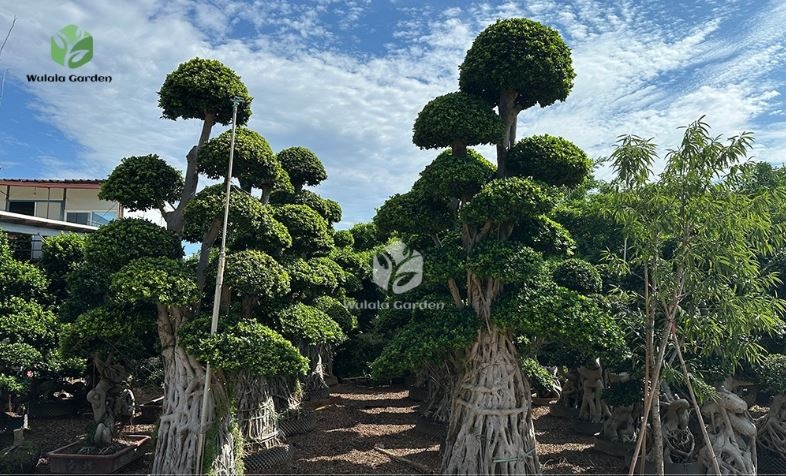
Ficus trees are known for their distinctive growth habits, and one of the most fascinating features found in some species is the development of roots above the ground. These structures are called aerial roots and can give a ficus an unusual, sculptural appearance.
For new plant owners, seeing roots growing from branches or stems can be confusing. It may look like something is wrong with the tree, but aerial roots are often a natural part of ficus growth.
Understanding why they develop and how they function can help you decide when to leave them alone and when the plant may need additional attention.
What Are Aerial Roots?
Aerial roots are roots that develop above the soil rather than entirely underground. In ficus species, they can emerge from branches, trunks, or other parts of the plant.
Depending on the species and growing conditions, aerial roots can remain suspended in the air, grow downward toward the soil, or eventually reach the ground and become established there.
Some ficus trees naturally produce large numbers of aerial roots, while others may produce only a few.
Why Do Ficus Trees Produce Them?
Aerial roots can serve several purposes. In certain ficus species, they contribute to structural support as they grow downward and eventually reach the ground.
This is particularly noticeable in banyan-type growth. Aerial roots can descend from branches, reach the soil, and develop into additional supporting structures.
Environmental conditions can also influence aerial root development. Warm temperatures, suitable moisture, humidity, and the plant’s natural growth habit can all contribute to their formation.
Are Aerial Roots a Sign of a Problem?
Usually, aerial roots are not automatically a sign that something is wrong.
If a healthy ficus develops roots from its branches or trunk, this may simply be part of its normal growth pattern. However, the overall condition of the plant should still be considered.
Look at the leaves, stems, soil, and root system as a whole. Problems such as persistent overwatering, poor drainage, pest infestations, or declining foliage should be investigated separately rather than blaming the aerial roots themselves.
The Role of Humidity
Humidity can be relevant to aerial root development in ficus plants. Many tropical and subtropical ficus species naturally grow in environments where moisture in the air is relatively high.
Indoor conditions can be much drier, especially when heating or air conditioning is running. A ficus that develops aerial roots may therefore benefit from a stable environment with appropriate humidity.
However, increasing humidity simply to force aerial roots is not necessary. The plant’s overall health should remain the priority.
Can Aerial Roots Reach the Soil?
Yes. In ficus species that naturally produce descending roots, an aerial root may continue growing downward until it reaches the ground.
Once it contacts suitable soil and establishes itself, it can become thicker and contribute to the plant’s support system.
This natural process is one reason mature banyan-type ficus trees can develop their characteristic broad, complex structures.
Should You Cut Aerial Roots?
There is usually no need to remove a healthy aerial root simply because it looks unusual.
If an aerial root is causing a practical problem, such as interfering with a walkway, becoming damaged, or making an indoor plant difficult to position, selective pruning may be considered.
Always use clean, sharp tools and avoid excessive pruning. Removing too many roots or making unnecessary cuts can create additional stress.
Ficus Varieties Known for Interesting Root Growth
Different ficus species have different growth habits. Banyan-related species are particularly well known for developing aerial roots that can eventually become structural supports.
If you are interested in ficus varieties with distinctive root development, you can explore this collection of aerial roots ficus plants and compare available options.
Final Thoughts
Aerial roots are one of the features that make certain ficus trees so interesting. They can develop from branches and stems, grow toward the soil, and in some species eventually become important supporting structures.
Rather than automatically removing them, observe how the plant is growing and consider whether the roots are healthy and causing any actual problem. With suitable light, watering, drainage, and environmental stability, a ficus with aerial roots can remain an impressive and healthy plant.
